Bebe, Cultura

The boy is mine

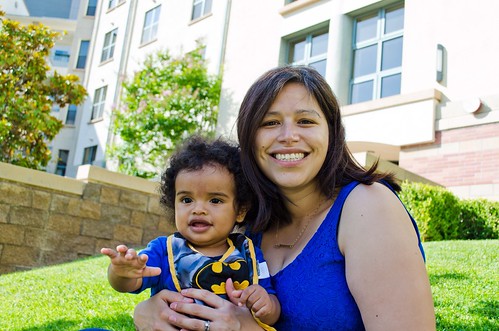
When I was on maternity leave one of my favorite things to do was take Xavi for walks around 5 pm. We’d wander the neighborhood and then meet up with Sean on his walk home from the train station.

I’d text him: I’m the one walking the stroller.

When we encountered each other on the sidewalk, he’d smile and say “Hi family.”

Once I returned to work, I stopped taking those short walks since it was often feeding time when I got home. Plus, by the time I got Xavi ready to go out, it’d be dark and cool. I missed it.

The week before Christmas was different. I got home a little earlier and it was hardly even cold out. On that Tuesday, I put Xavi in a sweater and texted Sean about his expected arrival at the train station. Since he would be 20 minutes later than usual, I decided to meander through the neighborhood checking out Christmas lights.

With Xavi in the Baby Bjorn, we walked up and down the block and surrounding streets. I pointed out lawn decorations like inflatable Santas, reindeer and snowmen. I tried to get Xavi interested in the lights, but he didn’t seem impressed probably because he couldn’t touch them or put them in his mouth. Two streets over, we stood on the sidewalk in front of one of the more elaborately decorated homes on the block. I showed Xavi the mini Christmas trees lighting the walkway and the other decorations.

Behind us, an older man and his granddaughter parked on the street and got out of their car.

“Look, sweetie, they’re admiring our Christmas lights.”

“They’re nice! I wanted to show him the lights in the neighborhood.” I responded.

The little girl just looked at us, but the man came closer and began asking about Xavi.

“Oh, he’s so small. How old?”

“Four and half months.”

He talked to Xavi and made him giggle.

“Is he yours?”

“Yes,” I replied feeling uneasy and wondering all sorts of things. “I gotta get going. Merry Christmas!”

I walked away and toward the usual meeting-up place with Sean thinking about the comment and what I had read from other women who have mixed race kids.

A week later, I got the same question. This time, Xavi was asleep in the stroller and we were out for a late morning walk. Two elderly women stepped to the side to let me through over a busted up section of the sidewalk.

“What do we have here?” the first one said in that high-pitched ‘it’s a baby!!!’ voice.

I stopped so she could look at Xavi. They started asking questions and commenting on his appearance. How old? His name? Oh, he’s sleeping. Oh my, so much hair! He’s adorable. As they spoke, Xavi stirred and opened up his eyes.

Oh no, they’re gonna wake him up, I thought.

“Is he yours?”

“Yes,” I said while my face screamed “of course he’s mine, you nosy dimwit!” I imagine my face gave away my feelings.

“Oh, he does look like mom,” she said to her friend.

“Have a good day,” I said ready to keep moving.

I walked the rest of the way trying to figure out why I’d been asked the question twice. There were two obvious reasons:

1. They think I’m the nanny because I’m Chicana and there are lot of families in the area who employ Latina caretakers for their kids — self included. If you go to the local park, most of the adults there on a late weekday morning will be Latinas in their 30s and 40s looking after mainly white toddlers and babies. Plus, the neighborhood I was walking through is wealthy and predominantly white. The Latinos I see there are often working in construction, landscaping and childcare. (I live a 10 minute walk away, but am used to running/walking through the area because I get in some hill work. Definitely not rich.)

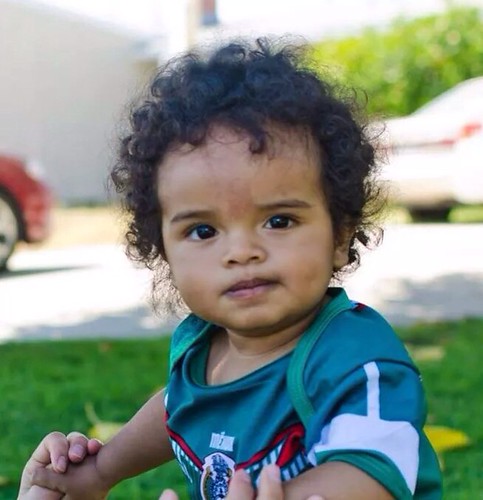
2. They don’t think Xavi looks like me because he’s mixed race and thus has browner skin and curly hair.

The second explanation seems more plausible in both instances. In the first, I was carrying Xavi in the Baby Bjorn and in my limited experience baby carrying seems like the domain of a mother or father. It was also evening. Second, one woman even brought up the resemblance seemingly to put me at ease and address the faux pas of asking the question in the first place.

I know mothers and fathers of mixed race children get this question. I’ve heard of moms making t-shirts saying “I’m not the nanny” and stories from parents who get scolded by judgmental strangers for speaking Spanish or another native language with kids at the playground in a “I don’t think the child’s parents would appreciate that” sense. I even thought I’d hear the questions or get the looks at one point, but didn’t think it would happen just five months in to motherhood.

I love that Xavi is a mix of our racial and ethnic backgrounds. He’ll grow up knowing he has roots in Mexico and Jamaica, southern California and New York. He’ll know rancheras and reggae, curry goat and birria de chivo, the beaches of Montego Bay and Mazatlán. He’ll cheer for Jamaican sprinters in the summer Olympics and el Tricolor in the World Cup. He’ll hear the lilting Jamaican accent of his grandparents Kenton and Eula and Spanish and Spanglish from his abuelitos Luz and Carlos. He may even roll his eyes when I say that he is Jamexican finding it corny and preferring Blaxican.

I hope he never feels the pit in his stomach when someone questions if I’m his mom or Sean’s his dad because we’re a lighter or darker shade of brown.

Getting trained early in the fine art of giving a proper side-eye.

And if he does, I hope that he brings his grade A side-eye and WTF face along with a polite, “Yes, she’s my mom…” followed by an under the breath, “y que te importa?”

Standard
Cultura, Deportes

Nap time reading

While the baby naps in my arms, I typically go through some form of social media and check out interesting news and stories. Or I binge watch The West Wing. Recent favorite reads:

Sherman Alexie is one of my favorite writers

The Poem That Made Sherman Alexie Want to ‘Drop Everything and Be a Poet’ [The Atlantic]

I have no shame in admitting that I’m an Alexie fangirl. I was so disappointed when I heard he was in LA recently for a book signing and I didn’t find out until a week later. (He doesn’t advertise his readings on Twitter, but his feed is very entertaining.) Anyway, this piece for The Atlantic’s “By the Heart” series was enlightening and inspirational. I’m grateful his poetry professor gave him the book that included the life altering poem.

At the same time, I’d never seen myself in a work of literature. I loved books, always, but I didn’t know Indians wrote books or poems. And then to see myself so fully understood in one line of a poem, as though that one line of a poem written by someone else was my autobiography … It was like understanding human language for the first time. It was like hearing the first words ever spoken by a human being, and understanding for the first time the immense communicative power of language.

I had never intellectualized this feeling that I’d had my entire life. And then, to hear the thing aloud. To see it in print. These are the kind of emotions that nobody puts words to, at least not where I’m from. So an intellectual and emotional awakening were fused in this one line. They came together and slapped me upside the head.

Gibson In ’88: ‘It’s A Good Story’ [ESPN]

Tuesday, October 15th marked the 25th anniversary of the most dramatic, amazing, awesome walk-off home run in Dodger history. I don’t remember seeing it live, but do remember those playoffs and being excited that my dad caught a ball at one of the NLDS games against the Mets. I have seen Kirk Gibson’s home run dozens of times as it’s played on the Dodger jumbo screen all the time, but didn’t know everything going on behind the scenes. And there was a lot!

Arash Markazi interviewed players from the ’88 Dodgers, A’s, coaches and management to fill in the story.

One of my favorite parts was reading Vin Scully’s role in motivating the very injured Gibson to stop icing, suit-up, take some practice swings with the bat boy and tell Tommy Lasorda he could pinch hit in a close game.

Vin Scully (Dodgers announcer 1950-present, NBC announcer 1983-89): In the middle of the ninth inning of that game, we were in commercial, and I had told the producer and director, ‘When we come out of commercial, follow me.’ You don’t do that very often, but, in this instance, I felt it was important, so, when we came out of commercial, there was a shot from the blimp of Dodger Stadium and I said, ‘If you’re in the ballpark with binoculars, your first thought would be, late in the game, Is Kirk Gibson in the Dodgers’ dugout? The answer would appear to be no.’ They did a slow pan from one end of the dugout to the other, and I basically said Kirk Gibson will not play tonight.

Gibson: I was sitting there, and, when Vin said that, I stood up and said, ‘My a–!’ It was time to go get dressed. That’s not to say I wouldn’t have gotten dressed if he hadn’t said it, but he did say it, and I was vocal about it with whoever who was around me at the time.

Today we don't have the Dodger blues. Right after I got the hoodie on, AJ Ellis hit a home run.

The playoffs have been stress inducing lately. Xavi and I are crossing our fingers in hopes of celebrating another improbable, impossible victory.

This game is a nail-biter. #dodgers #nlcs

Go Dodgers!

Jaclyn Day

I’ve been following Jaclyn Day’s blog for a couple of years, but never really paid attention to anything aside her affordable fashion posts. I was missing out, but perhaps it’s good that I’m just finding some of these posts months later when I’m at the beginning of my own parenting experience and can relate to her fretting over the cost of childcare or dealing with her post-pregnancy body image issues.

These posts hit home:

The things about parenting we don’t talk about — on maternity leave, childcare and the privileges some parents have/don’t have

No easy answer — sharing photos and videos of our children on social media

Standard
Cultura, Música

Lindas Canciones

I was 7 or 8 when Mary came over and excitedly shared a must-listen new tape, Linda Ronstadt’s Canciones de mi Padre. I’d never heard of Linda Ronstadt and was a little confused by her name. Ronstadt didn’t sound Mexican. I soon came to learn that she was US-born and didn’t speak much Spanish. My parents didn’t care. Linda could sing the hell out of some rancheras and soon they were playing the tape constantly.

The music was as beautiful as the woman on the cover of the tape and I loved it. I already had been introduced to rancheras through José Alfredo Jiménez classics like “Volver, volver”, “El Rey,” and “Caminos de Guanajuato” thanks to my Guanajuato-born father. While Linda Ronstadt was not my introduction to mariachis or rancheras, she was the first woman I’d heard sing backed up by a mariachi. It would be many years until I found out about singers like Lola Beltrán or Chavela Vargas. Until then, Linda was the pinnacle of female rancheras songs in my eyes.

serenata

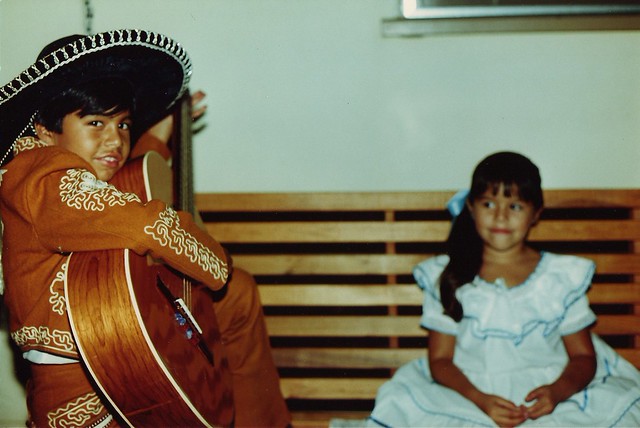
I wasn’t strong enough a singer to emulate her as a kid — or even as an adult — but Danny gave it a shot. He learned to sing “Y ándale”, a song about not caring that your fianceé´s parents will see you as a drunk when you come over to see he. Danny practiced with dad and gave his big performance at tía Nelly’s wedding backed by a full mariachi. His performance was a hit. Ironically, dad quit drinking soon after.

In college, I bought my own copy of Canciones on CD and listened to it countless times. I’ve learned the songs since then and sing along… or try to. Five years ago, I went to a concert at UCLA’s Royce Hall by Linda Ronstadt and Mariachi de Nati Cano on the bill. I was so excited to hear live versions of the songs I grew up listening to with my dad, but came away feeling confused and let down. Linda didn’t sound like the woman on the albums I’d come to love. It didn’t make sense how her voice could have changed so much as she aged.

Mexicanitos al grito de guerra

Now I understand that at the time she was already dealing with the onset of Parkinson’s, a disease her grandmother suffered from as well.

As the Parkinson’s news broke out last month, I realized I couldn’t name any of Ronstadt’s hits in English. All I knew was Canciones which I still sing on the regular. In fact, all I could think about was the songs I loved on the first album and the follow-up, Más Canciones.

I sing Hay Unos Ojos frequently to Xavier. I hold him in my arms and sing as we walk around the apartment. He stares up at me with eyes that seem to get brighter and wider. When I got pregnant, I was a little sad that I never took the time to learn how to play the guitar. I wanted to be like my dad who would entertain us for hours with the guitar and a short list of pop and children’s songs. I may not have the guitar (for now), but I do have my voice and a love for singing. Hopefully Xavier will remember the songs I sing for him with the same fondness I think of songs like Cri Cri’s “Los Tres Cochinitos” or the Cascades’ “Listen to the Rhythm of the Falling Rain.”

If I had to list 10 albums that changed my life, Canciones would definitely be on it. I’m grateful Mary introduced my parents to Linda Ronstadt. They played the album and actively sang along. I don’t think dad ever expected that 25 years later I’d follow his example and would sing the same songs to my son.

Standard
Cultura, Halloween, Los Angeles

Morning becomes offensive

The first present for blackface Christmas — what my play cousins at PostBourgie call the season shortly before Halloween and through Thanksgiving — comes from KCRW’s Instagram account.

Not cool, KCRW

I voiced my disappointment via Twitter and on Instagram.

I checked back a little later to find a flippant response from the person behind the Instagram account.

Not cool, KCRW

Oh right, I should just chill since it’s Halloween. I forgot that makes it okay. Not really.

Earlier this week I receive a mailer asking me to resubscribe to KCRW. Over the past ten years I’ve subscribed on and off as I enjoy the music and news programming. I was likely going to renew my subscription, but now am reconsidering.

I follow KCRW’s social media accounts on Twitter and Instagram. I was extremely disappointed, offended and saddened to see one of my favorite cultural institutions in Los Angeles feature one of it’s deejays (Anne Litt) in a Native American costume during the Masquerade Ball (10/27/12). While I respect an individual’s First Amendment right to wear what he/she wants, I do not support institutions that feature a prominent member in what is the Native American equivalent of blackface. I also do not appreciate the belittling response: “Hey y’all. No disrespect .. It’s Halloween. !!” (Screenshots can be found here: [link] and [link])

Dismissing valid concerns is not a suitable response for a public radio station.

Sincerely,

Cindy Mosqueda

For those not in LA, KCRW is a public radio station based out of Santa Monica College. They carry NPR as well as locally produced programming. Their music programming is highly regarded. I’ve always enjoyed the diversity on Morning Becomes Eclectic, especially when Nic Harcourt was at the helm. Harcourt featured some of the best bands in Latin America even though the primary audience is not Spanish speaking. I first subscribed in 2002 after starting my first full-time job. I subscribe on and off, mainly because I’m lazy about renewing my subscription or funds were tight in grad school.

Standard
Cultura, Familia

Pocho studies

Spanglish

Thanks to Daily Chicana’s recent post on how two Chicanas in the same family can be very different, I’ve become really interested in why my younger siblings, Lori and Adrian, are a lot less fluent in Spanish than Danny and me. I’ve seen this in other families and wonder if my family is the norm, exception, or somewhere in between.

A little about my family:

My parents both immigrated as children and completed all of their school in the US. They’re fluent in both English and Spanish as are most of their siblings. I grew up speaking Spanish almost exclusively with both sets of grandparents although they understand and speak a little. All of my first cousins are fluent in English.

In our home, my family spoke English and Spanish but it was hardly equal. I’d say it was 80/20 with a lot of code-switching and Spanglish. Now that Papá Chepe and Mamá Toni live with my parents full time, it’s less lopsided. However, our home is still English dominant.

With the exception of my grandparents, we didn’t watch much Spanish TV in our home. My mom wasn’t a novelera, but as we got older she did get in to a few series. My first novela experience was Rosa Salvaje. I started watching when I stayed at Papá Chepe and Mamá Toni’s house in Zacatecas for a few weeks one summer.

While we didn’t watch much Univision or Telemundo, we attended church services primarily in Spanish. Danny and I sang with the kids’ Spanish choir and were involved in other cultural activities like ballet folkórico. We spoke Spanish at choir practice, but mainly spoke English at dance practice and with our friends there.

Glory days

As for the four kids, we’re all pochos (in the language sense) but to a different degree. I’m bilingual and biliterate, but know I’m not as strong as my friends who grew up speaking Spanish almost exclusively at home. I also get super self conscious when I spend time with my cousins in Mexico. I fear they’ll laugh when I trip over words. They don’t, they’re all very kind and some have actually complimented me on my Spanish. I studied Spanish grammar and literature in high school and minored in Spanish in college. As an adult, I’ve spent a lot more time visiting family in Mexico. My siblings haven’t been to Guanajuato or Zacatecas since they were kids. I also listen to a lot of music from Mexico and South America.

Danny was more fluent and confident in Spanish until we got to high school and I started taking Spanish classes. The least fluent are the younger two. Lori and Adrian speak and understand Spanish, but it’s what many would call “pocho” (literally incomplete, partially formed; colloquially it refers to US-born Mexican kids with less than perfect Spanish skills).

serenata

I’m not 100% sure why, but I bet Danny and I are part of the reason. With Danny and I speaking English most of the time, Lori and Adrian heard a lot less Spanish at home. When Danny and I were younger, we heard our parents speak both languages and spent more time at my grandparents’ home.

I’ve seen this with my cousins too. The elder children are fluent/almost fluent while the younger ones barely speak — or don’t want to speak — Spanish.

Adrian and Lori

I was curious about this last week and asked friends on Twitter and FB. Some people related to my experience while others said all their siblings were equally fluent. Some had confounding factors. Like me, they studied their heritage language or spent time studying abroad during college. Some had families where elder children were born in the native country while the younger ones were born here. It was interesting to read the variety of experiences as well as the thoughts of parents with young children who are trying to raise their children bilingual (or trilingual in one case). It made me think more about raising a bilingual child when my partner is not a Spanish speaker.

It’s fascinating to me how the children in one family — only 7 years apart from eldest to youngest — could be so different in language acquisition.

Standard