
April 8, 1935:
Oscar Zeta Acosta was born in El Paso, Texas (also known as El Chuco)
“Oscar was a wild boy. He stomped on any terra he wandered into, and many people feared him….His birthday is not noted on any calendar, and his death was barely noticed….But the hole, that he left was a big one, and nobody even tried to sew it up. He was a player. He was Big. And when he roared into your driveway at night, you knew he was bringing music, whether you wanted it or not.”
– Hunter S. Thompson in the introduction of the reissues of Oscar Zeta Acosta’s The Autobiography of a Brown Buffalo and The Revolt of the Cockroach People
Still lost on this Oscar guy?
Maybe this mini-bio from Gregg Barrios in the San Antonio Current will help:
Oscar Z. Acosta, born a Tejano in 1935 in El Chuco, grew up in California. He later became a lawyer and part of the Chicano cultural and civil-rights movimiento in the late 1960s. He ran as a Raza Unida candidate for sheriff of Los Angeles County in 1970. Despite a minuscule campaign budget, he came in second with more than 100,000 votes. His platform: Abolish the police department. [source]

Even though I was a Chicana/o Studies major in college who took a lot of Chicano literature classes, I learned about Acosta through the film adaptation of Hunter S. Thompson’s Fear and Loathing in Las Vegas. While watching it with MEChista friends, I remember one of the guys saying that the Samoan attorney, Dr. Gonzo, was really supposed to be Chicano. I was clueless.
OSCARAD
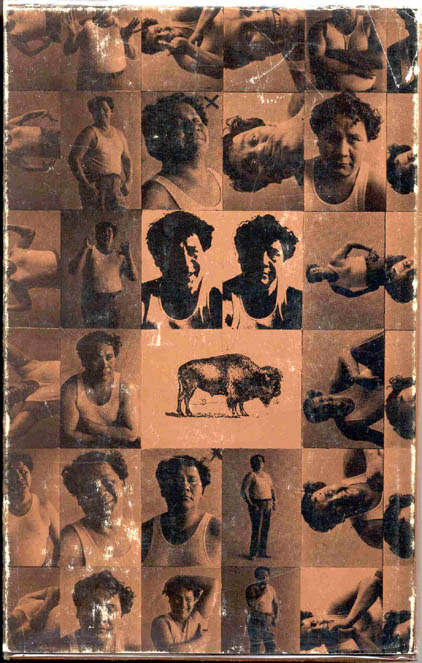
A few years later, I read The Autobiography of a Brown Buffalo for one of my Chicano literature classes. It was much different than the other works, but I enjoyed it. I flipped through my copy today and was amused at what I underlined. Some examples (I added the bolded emphasis):
“What value is a life without booze and Mexican food? Can you just imagine me drinking two quarts of milk every day for the rest of my life? they said, “Nothing hot or cold, nothing spicy and absolutely nothing alcoholic.” Shit, I couldn’t be bland if my life depended on it.” (p. 12)
“What I see now on this rainy day in January, 1968, what is clear to me after this sojourn is that I am neither a Mexican nor an American. I am neither a Catholic nor a Protestant. I am a Chicano by ancestry and a Brown Buffalo by choice. Is that so hard for you to understand? Or is that you choose not to understand for fear that I’ll get even with you? D you fear the herds who were slaughtered, butchered and cut up to make life a bit more pleasant for you? Even though you would have survived without eating of our flesh, using our skins to keep you warm and racking our heads on your living room walls as trophies, still we mean you no harm. We are not a vengeful people. Like my old man used to say, an Indian forgives, but he never forgets… that, ladies and gentlemen, is all I meant to say. That unless we band together, we brown buffalos will become extinct. And I do not want to live in a world without brown buffalos.” (p. 199)
In the same Chicano literature class, we also read Acosta’s 1973 letter to Playboy in which he tried to set the record straight about gonzo journalism. He disappeared in Mexico the next year and thus most people associate Thompson with the beginnings of gonzo journalism. Chicanos, however, have a different take on it. (See: When Zeta met Hunter a short article by Gregg Barrios).

For more on Acosta’s activist, legal and political career, check out Oscar Zeta Acosta: One of God’s own prototypes, an excellent blog post by Amaury Nora. Or just read Revolt of the Cockroach People.


