Cuentos

Offensive interference

Bryan Stow’s beating at the Dodgers’ home opener left me with a lot of angst and sadness. The whole thing kept me up one night and I started thinking of survey questions. I know my experience isn’t generalizable. After all, I call Dodger Stadium one of my happy places. Was I just wearing Dodger blue-colored glasses? Would others’ experiences be radically different?

I’m still unsure. I’m waiting for more response to the survey before I close it and begin analyzing.

In thinking about the atmosphere, I reflected on my own experiences. Dodger Stadium is one of my happy places, but I’m not always happy there. That’s inevitable as I’m going to see my team lose. However, my worst experience had nothing to do with the actual game. In fact, I needed Baseball Almanac to refresh my memory about the game details (SF v. LA, Giants won 1-0).

Rene, Chepe and adrian

In September ’08, I attended the last home game of the season with my brothers, Papá Chepe and six cousins. The cousin/grandpa outing was my cousin Ernie’s idea. He asked Chepe about the last game he attended and found out that it had been years, maybe decades, since he’d been to Chavez Ravine. We bought a dozen tickets in right field on field level. We chose those seats because they were close to the handicap parking and Chepe wouldn’t have to walk much or climb up/down too many stairs. We arranged ourselves in one row with Chepe in middle of his nietos.

The game was slow and scoreless until the 11th inning, but I still witnessed the kind of drama that gets my heart beating fast and makes my palms sweaty.

In the 4th inning a middle-aged Latino, I’ll call him el Veterano, in front of Rene turned around. Being a metiche (busybody) I leaned over across Adrian so I could hear what el Veterano was saying.

“For the past 45 minutes I’ve been sitting here listening to you talk shit in front of my wife and kids. I’m tired of it.”

I wasn’t surprised he was complaining. Earlier in the game, I shushed Adrian and Rene because of their language. I expected someone to turn around and ask, “can you guys watch your language?” They talked a lot too and only quieted down to drink their beers, munch on snacks, and eat Mexican candy.

I knew the guys were at fault, but I was on their side as soon as el Veterano began speaking and said “shit.” I didn’t like his tone nor hypocrisy. I figured he should use FCC approved or “pre-school toy” friendly words if he was going to complain about cursing.

Rene responded with a half apologetic, half surprised look. Adrian remained quiet. I leaned in closer.

El Veterano went on, “And it’s even worse that you sound like a nigger.”

I was shocked. Really? He used that word? In public? To complain about strangers’ language? And next to his wife, teenage son and pre-teen daughter?

I couldn’t help it. I jumped in.

“You’re offended by his language and then you go and use a racial slur?! I can’t believe you’re complaining about our language and saying you’re offended. You’re offending me with that word!”

My face reddened, my hands shook and my blood pressure shot up.

El Veterano shifted in his seat. His wife and kids, who had previously been listening, didn’t dare turn back to look at us.

“I… I’m sorry,” he said. He turned back to face the game and never turned around again.

The guys looked at me, still in shock over what had just happened. Beside me, Chepe sat oblivious as to what had just happened. Danny and Nancy leaned over to be filled in on the chisme. Adrian said, “I knew as soon as he said that you were going to jump in. I’m glad you did.”

Later in the game, Adrian (also a metiche) told me he’d read El Veterano’s pre-teen daughter text message to a friend. It read, “what are you doing, bitch?”

Standard
Deportes, Los Angeles

Survey: is Dodger Stadium safe?

Too many "thugs"?

I’ve been reading a lot about the beating of Bryan Stow after opening day at Dodger Stadium (March 31).

Stow, a 42-year-old Santa Clara paramedic and father of two who traveled to Dodger Stadium on March 31 in Giants regalia. Walking through the parking lot after the game, Stow was accosted by two men, who taunted him, punched him and kicked him as he lay injured. [Source]

His injuries were serious enough to put him in a medically induced coma. He is still in critical condition.

Like many fans, I’m horrified, disgusted and deeply saddened that some pendejos would do this. I pray for Stow’s full recovery and hope such violence never occurs again at Dodger Stadium (or any other sporting event).

Other fans have expressed outrage online or called in to talk radio shows. Many shared their own concerns about going to Dodger Stadium and some brought up the race element before sketches of the suspects were released. The suspects look like your average pelón gang-banger. The comments section of the LA Times were filled with racist and anti-immigrant remarks. I started reading “thug” as a code word for young Latino male. Honestly, I wasn’t surprised by the racism.

However, I am surprised by the number of levelheaded people I know who no longer go to games, worry for their safety and think the atmosphere is not family friendly. My personal experience is much different and I go to lots of games (even if I grumble about how much I hate contributing to the McCourts’ profits).

What do you think? I’ve written a survey about the atmosphere in the stadium, in the parking lot and the surrounding area. Fill it out and share it with others who go to lots of games or just a few every couple of seasons. I hope to share some of the responses next week.

Dodger Stadium atmosphere survey

Edit: The survey is now closed. You can chime in on the responses when I post about the survey results.

Disclaimer: I’m just a fan. I have no affiliation with the Dodger organization, LAPD or city hall. Thus, the survey is focused on experiences and opinions rather than suggestions for improvement.

Standard
Corriendo, Los Angeles

CicLAvia (on foot)

CicLAvia 2011

For the first time in a few weeks, my weekend running didn’t include a race (running or cheering). That didn’t stop me from making in to an event thanks to the second CicLAvia.

I headed out to Boyle Heights to run the route east to west. The not-a-race event is mainly marketed to cyclists. I don’t own a bike, but that didn’t matter to me. The 7+ mile route of LA streets were closed to automobile traffic and open to cyclists, skateboarders, kids on scooters, pedestrians and runners. I missed the first CicLAvia when I was in New York last October and didn’t want to miss another free opportunity to run car-less LA streets (free!).

I had a lazy morning and didn’t get out to Boyle Heights until 1:30. Sean dropped me off by the Shakey’s at Cesar Chavez and State. He was too bummed about his broken MacBook to join me on foot or his bike so he went home to troubleshoot. From Cesar Chavez and State, I ran South past White Memorial to 4th Street where I joined a swarm cyclists heading west on the 4th Street bridge (traffic was going in both directions).

Since I’d read El Chavo’s post on the first CicLAvia I knew I’d be way outnumbered by cyclists. And I was. I didn’t feel too safe in the street with cyclists weaving in and out (mainly the kids who weren’t really paying attention and don’t know how to drive), taking pictures and texting. Most were riding at a leisurely pace, but occasionally some guy would come speeding by. I stuck to the “gutter lane,” as El Chavo called it, or jumped up on to the sidewalk where I’m accustomed to running. The sidewalks through Little Tokyo and most the Historic Core of Downtown LA were too crowded, so I had to go on the street. I kept the sound on my iPod Shuffle low, but I probably would’ve been safer turning it off.

CicLAvia 2011

The streets weren’t completely shut down to automobile traffic. There were several points along the route where cyclists and pedestrians were required to stop at crossing points for cars. Traffic officers directed motorists, pedestrians and cyclists. It all went pretty smooth. I think we stopped at every intersection through downtown, which was a nice breather. It was a pretty warm day (high 60s and sunny) so the rest helped me get through my first long-ish run since the marathon. I didn’t stop at any of the rest stops at Hollenbeck Park, City Hall, MacArthur Park or the Bicycle District. I did stop for a few minutes when I ran in to Pachuco3000 (above) and bought some lemonade from some kids at a lemonade stand in East Hollywood at the end of the route (below). When I finished I called Sean and we arranged a pickup spot for me a few miles south in Koreatown.

CicLAvia 2011

Even if it was a little lonely for a runner, I’m glad I got out. I did 10 pretty flat miles through areas of LA I never run through and don’t visit often enough. I saw a friend, had some great lemonade and got a nice tan from my racerback tank and capri running pants. Fun times.

All photos by srd515 and used under Creative Commons license.

Standard
Historia

This day in Chicana herstory: Dolores Huerta (1930)

April 10, 1930:
Dolores Huerta (nee Fernadez) was born in Dawson, New Mexico*

From a biography put together by the Girl Scouts:

Dolores Huerta is the President of the Dolores Huerta Foundation, and the co-founder and First Vice President Emeritus of the United Farm Workers of America, AFL-CIO (UFW). She is the mother of 11 children, 14 grandchildren and six great-grandchildren. Dolores has played a major role in the American civil rights movement.

Dolores Huerta was born on April 10, 1930 in the mining town of Dawson, in northern New Mexico, where her father, Juan Fernandez, was a miner, field worker, union activist and State Assemblyman. Her parents divorced when she was three years old. Her mother, Alicia Chavez, raised Dolores, along with her two brothers, and two sisters, in the San Joaquin valley farm worker community of Stockton, California. She was a businesswoman who owned a restaurant and a 70-room hotel. Dolores’ mother was a major influence in Dolores’ life. She taught Dolores to be generous and caring for others. She often put up farm workers and their families for free in her hotel. She was also a community activist, and supported Dolores and her Girl Scout troop. [Source]

Since college — when I first became aware of Dolores Huerta’s legacy of activism and leadership — I’ve seen her speak a few times at rallies or organized labor events. Those always left me inspired. However, it’s when I see her unexpectedly at an airport or restaurant that I’m left a little star struck. Can you blame me?

Her life’s accomplishments are impressive. As an octogenarian she’s still going strong and continues the work to improve women and poor peoples’ lives as the president of the Dolores Huerta Foundation. For her 80th birthday party, her organization hosted a benefit concert for the foundation. She speaks out on sexism and homophobia, often ignored in the Latino activist community.

Dolores Huerta is an inspiration to women who want to be leaders and affect change in their local communities and beyond. She’s a mujer to be reckoned with. If you have any doubts, simply listen to the strength in her voice as she discusses her life’s work in an interview with Maria Hinojosa on Latino USA. (Make sure to scroll down… you’ll see someone familiar.)
Continue reading

Standard
Historia

This day in Chicano history: Oscar Zeta Acosta (1935)

April 8, 1935:
Oscar Zeta Acosta was born in El Paso, Texas (also known as El Chuco)

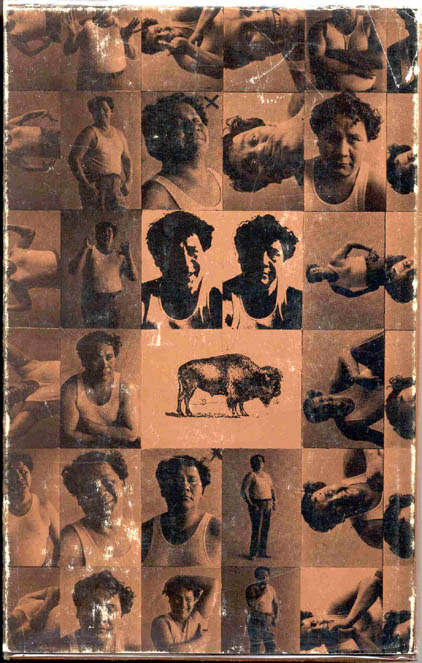
“Oscar was a wild boy. He stomped on any terra he wandered into, and many people feared him….His birthday is not noted on any calendar, and his death was barely noticed….But the hole, that he left was a big one, and nobody even tried to sew it up. He was a player. He was Big. And when he roared into your driveway at night, you knew he was bringing music, whether you wanted it or not.”
– Hunter S. Thompson in the introduction of the reissues of Oscar Zeta Acosta’s The Autobiography of a Brown Buffalo and The Revolt of the Cockroach People

Still lost on this Oscar guy?

Maybe this mini-bio from Gregg Barrios in the San Antonio Current will help:

Oscar Z. Acosta, born a Tejano in 1935 in El Chuco, grew up in California. He later became a lawyer and part of the Chicano cultural and civil-rights movimiento in the late 1960s. He ran as a Raza Unida candidate for sheriff of Los Angeles County in 1970. Despite a minuscule campaign budget, he came in second with more than 100,000 votes. His platform: Abolish the police department. [source]

Even though I was a Chicana/o Studies major in college who took a lot of Chicano literature classes, I learned about Acosta through the film adaptation of Hunter S. Thompson’s Fear and Loathing in Las Vegas. While watching it with MEChista friends, I remember one of the guys saying that the Samoan attorney, Dr. Gonzo, was really supposed to be Chicano. I was clueless.

OSCARAD

A few years later, I read The Autobiography of a Brown Buffalo for one of my Chicano literature classes. It was much different than the other works, but I enjoyed it. I flipped through my copy today and was amused at what I underlined. Some examples (I added the bolded emphasis):

What value is a life without booze and Mexican food? Can you just imagine me drinking two quarts of milk every day for the rest of my life? they said, “Nothing hot or cold, nothing spicy and absolutely nothing alcoholic.” Shit, I couldn’t be bland if my life depended on it.” (p. 12)

“What I see now on this rainy day in January, 1968, what is clear to me after this sojourn is that I am neither a Mexican nor an American. I am neither a Catholic nor a Protestant. I am a Chicano by ancestry and a Brown Buffalo by choice. Is that so hard for you to understand? Or is that you choose not to understand for fear that I’ll get even with you? D you fear the herds who were slaughtered, butchered and cut up to make life a bit more pleasant for you? Even though you would have survived without eating of our flesh, using our skins to keep you warm and racking our heads on your living room walls as trophies, still we mean you no harm. We are not a vengeful people. Like my old man used to say, an Indian forgives, but he never forgets… that, ladies and gentlemen, is all I meant to say. That unless we band together, we brown buffalos will become extinct. And I do not want to live in a world without brown buffalos.” (p. 199)

In the same Chicano literature class, we also read Acosta’s 1973 letter to Playboy in which he tried to set the record straight about gonzo journalism. He disappeared in Mexico the next year and thus most people associate Thompson with the beginnings of gonzo journalism. Chicanos, however, have a different take on it. (See: When Zeta met Hunter a short article by Gregg Barrios).

For more on Acosta’s activist, legal and political career, check out Oscar Zeta Acosta: One of God’s own prototypes, an excellent blog post by Amaury Nora. Or just read Revolt of the Cockroach People.

Images source

Standard