Ten reasons why Papá Chepe is awesome:

1. Let’s start with the physical. You can’t deny that he’s always been a handsome man. (Photo taken in 1958.)
Continue reading
Ten reasons why Papá Chepe is awesome:
1. Let’s start with the physical. You can’t deny that he’s always been a handsome man. (Photo taken in 1958.)
Continue reading

In December I scanned a bunch of photos — both professional and snapshots — from my parent’s wedding on July 23, 1977.
On their 32nd anniversary, I share my favorites with you.

Su historia cuenta, por ejemplo, que el mar la trajo a México y que luego echó raíces en Jerez, Zacatecas, convirtiendo esta ciudad en el tradicional hogar de la arracada mexicana.
— La arracada, historia de una joya migrante
I had my ears pierced as a baby. Mom bought me diamond studs. I lost those. She bought another pair. I lost those too. She then opted for pearls. Yes, I lost those too.
Eventually, at Mamá Toni’s insistence, I got a pair of arracadas jerezanas. Mamá Toni, constantly traveling from LA back to her home El Cargadero (near the city of Jerez, Zacatecas) saw it fitting that I would don the typical earrings. She brought back a pair from one of her trips so that I could continue the tradition.
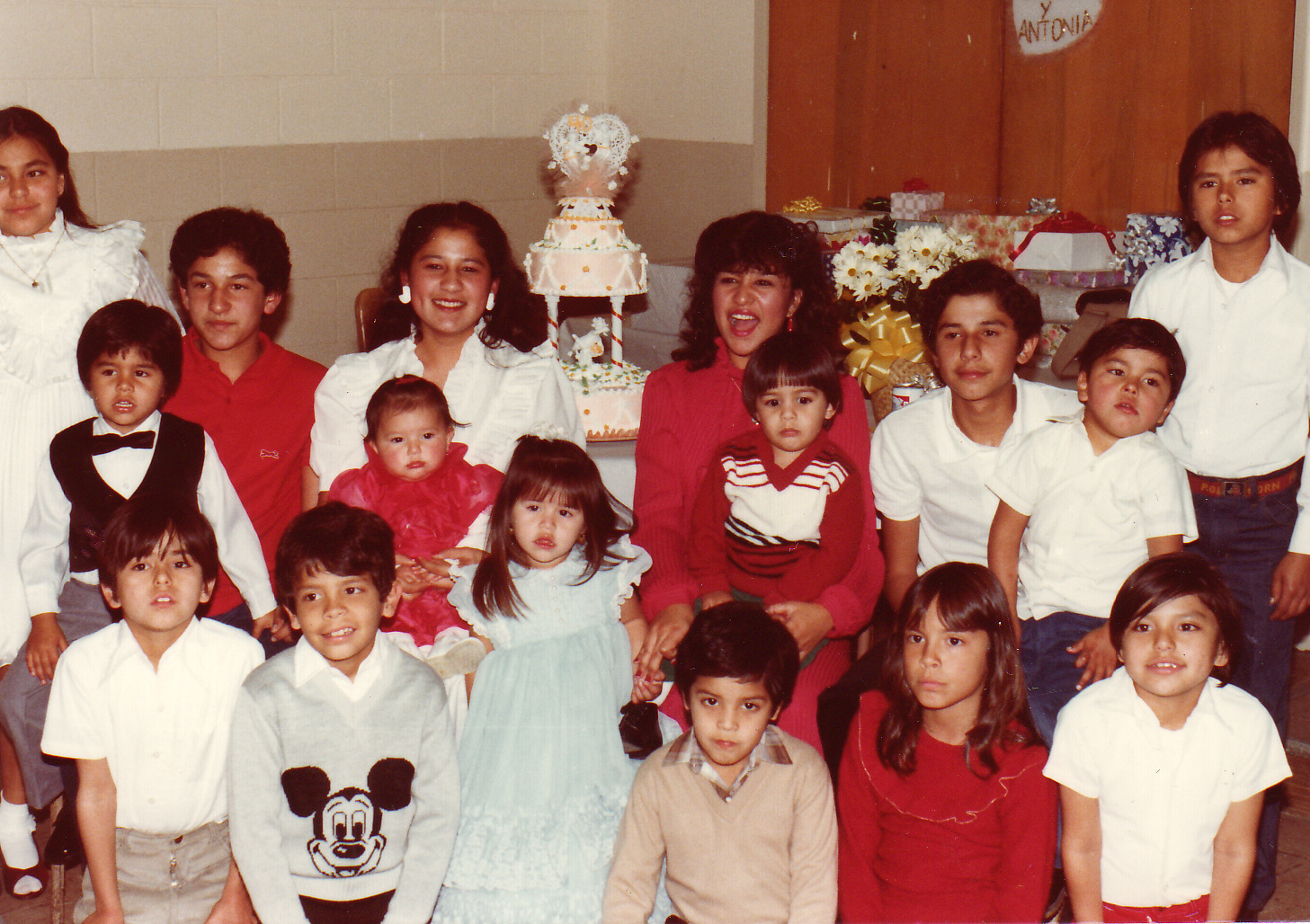
I’m wearing the arracadas as a two year old during Mamá Toni and Papá Chepe’s 40th anniversary party in 1983. They’re small and hard to see, half-hidden by my hair.
But they’re there. The earrings are a constant. I’m wearing them as a paje in my aunt’s wedding, in a frilly red dress in front of the Christmas tree, in my baseball uniform at the park, and in a family photo on mother’s day.
In later photos, the earrings are missing. I didn’t lose them unlike the studs I had as a baby. Instead, the earrings were stored in my mom’s jewelry box. They’re still there, along with Lori’s arracadas.
***
 As a little girl, I was clueless about the significance of the arracadas I wore constantly. I didn’t know that my mom and her sisters also wore them as girls. I didn’t know that they were as much of a signifier of Jerezano/Zacatecano roots as decals on a truck, belts, or handkerchiefs featuring your homestate’s name like a logo.
I didn’t even know the design was specific to Jerez, Zacatecas until I saw my mom ask a random woman about her earrings. I was a high school senior and had just been admitted to UCLA. My mom took me to the campus for an event for newly admitted Latino students. While mingling, she noticed a woman wearing arracadas and insisted on asking her.
“Perdón, vi sus arracadas, y le tenía que preguntar. ¿Es usted de Jerez, Zacatecas?”
The woman’s face lit up as she nodded yes. The woman’s daughter and I stood by as our mother’s discussed which small rancho they were from in the municipio de Jerez.
***
A few years ago, I took a trip to Jerez, Zacatecas. On my visit, I made a trip to Joyería García to purchase two pairs of silver arracadas, one for me and one for a friend from Guadalajara (she’d seen the earrings on her fiancee’s grandmother and wanted a pair).
I don’t wear the arracadas constantly like I did as a girl. I need more variety these days. But when I do wear them, I invariably am asked by women who notice such things, “are you from Zacatecas?” as they touch their own lobes.

I spent most of the weekend with Lori. We were abandoned by the rest of the family for the holiday weekend (except the grandparents and Danny, but they always do their own thing). On Saturday, her boyfriend came over and grilled some chicken for dinner. The next day, Lori and I went shopping, swimming and then drove over to the Hollywood Bowl for the Death Cab for Cutie, Tegan and Sara and the New Pornographers concert.
On the way to the show, we talked about leggings.
“I like them because I can wear a long blouse or something over them during my ‘fat days’,” Lori said. “And you can still look dressed up enough for a night at the club.”
I nodded. “I just wear them under short skirts.”
“Exactly, they’re supposed to be worn under something, not as pants. Women at the gym do that. You can totally see their chonis. They make it worse too by wearing something white, at least wear black.”
I laughed and agreed that women should ask a friend or family member to do a simple check for the opacity of their leggings.
“You should put out a notice on your blog,” she said.
“I’ll do that.”
We parked at Hollywood and Highland and started the half mile walk up the hill to the Hollywood Bowl. We followed several other concertgoers and kept up our fashion commentary.
I pointed at the couple up ahead, “I think I know what happened. They were probably getting ready for the show and he told her, ‘babe, I don’t have anything to wear tonight.’ I’m pretty sure she offered him her pants.”
“I don’t understand why guys wear such tight pants. They’re not even that comfortable. And this is coming from someone who wears tight pants and doesn’t have the same issue as guys.”
“Yeah, it’s too hot for summer. Denim doesn’t let you breathe.”
“At least they’ll save money on birth control in the long run.”

When I was six* mom and dad told us that our beloved Collie, Romeo, ran away to be with his girlfriend, Juliet. I believed them.
It made sense. Romeo was always getting out. Someone, probably me or Danny, would leave the garage door open and he’d run out from the backyard, through the garage, down the driveway and out onto our calm suburban street. Dad stopped what he was doing and gave chase. He had to catch Romeo before he got hit.
He got hit once. They took him to the animal hosptial. After that, he didn’t come home. That’s when mom and dad concocted the story.
I believed this well into my teens. Yes, it took me that long to figure it out.
***
I don’t remember ever playing with Romeo. There are no photos of him in the many albums and shoe boxes full of family photos. However, there are some photos of Dandy, Papá Chepe’s collie. I believe he was Romeo’s father. Some of his other offspring had been sent to live with my tío Beto (Queenie) and my tío Chuy.
Tío Beto sent me those photos recently. In them, the cousins, Danny and I are playfully petting Dandy at Papá Chepe and Mamá Toni’s former Boyle Heights home. I remember going on walks with Papá Chepe and Dandy around the neighborhood. I don’t know what happened to Dandy. I imagined he died of old age. Now Papá Chepe babies VR, our Chihuahua mix, just like the rest of the family. He also takes him for walks. The only difference? Papá Chepe now carries a cane and moves much slower.
* Or seven or eight, the age is not really important.
 Lotería Chicana