Cultura, Escuela

One of these days…

I’m going to get back in to danza.

***

I attended the SACNAS conference in Anaheim. I was there primarily for Job2 in which I do research on undergraduate and graduate students in science, technology, engineering and math (STEM). Students and co-workers from Job1 were there too and it was a nice opportunity to get to know them better even though I’ve known some of them for 4+ years now. I really enjoyed the conference and it made me even more excited for my dissertation.

The conference ends with a pow wow open to conference attendees as well as the public. Even though I was tired from a long day of traipsing around the Anaheim Convention Center and learning more about STEM education (in practice), I decided to stay. I like pow wows. I love the dancing, drumming, beautiful and intricate regalia, the representation of a rich cultural tradition and an opportunity to buy all kinds of beautiful jewelry.

I had the most fun at this pow wow, even though there were no frybread vendors, because I joined in on the dancing. I even tried to do what I remembered from my danza days during the intertribal.

Standard
Comida, Cultura

Paper bagging it…

Perhaps I shouldn’t have read Gustavo’s article on the dearth of comida Zacatecana in LA.

Such diversity is a natural result of decades of Mexican migration, but there’s one glaring anomaly: Zacatecas’ culinary traditions are virtually invisible in local restaurants.

This quirk belies demography. The state is to modern-day Southern California what Iowa was for a previous generation of Angelenos: a place known for its work ethic and its conservative values, and for sending hundreds of thousands of its residents to our sunny wonderland.

Now I’m hungry. Not for queso añejo (which my siblings and I always called queso de pata/feet cheese), or even asado (which I don’t really like and have never had at a wedding), but for a torta de chorizo (which I can’t have today, anyway).

My family doesn’t have a quesero, but we do have a chorisero. Every few months, we’ll get a paper bag with some chorizo links. It’s the best chorizo I’ve ever had, not the crap you buy at the store. Last time I had one, a few days after Christmas, was to prove to my Papá Chepe that I do eat.

I wonder if Mamá Toni has made any of her gorditas de frijoles lately. Those would be yummy today. Or capirotada.

Damn. I hope Mamá Toni saves me some.

Standard
Cultura, Historia

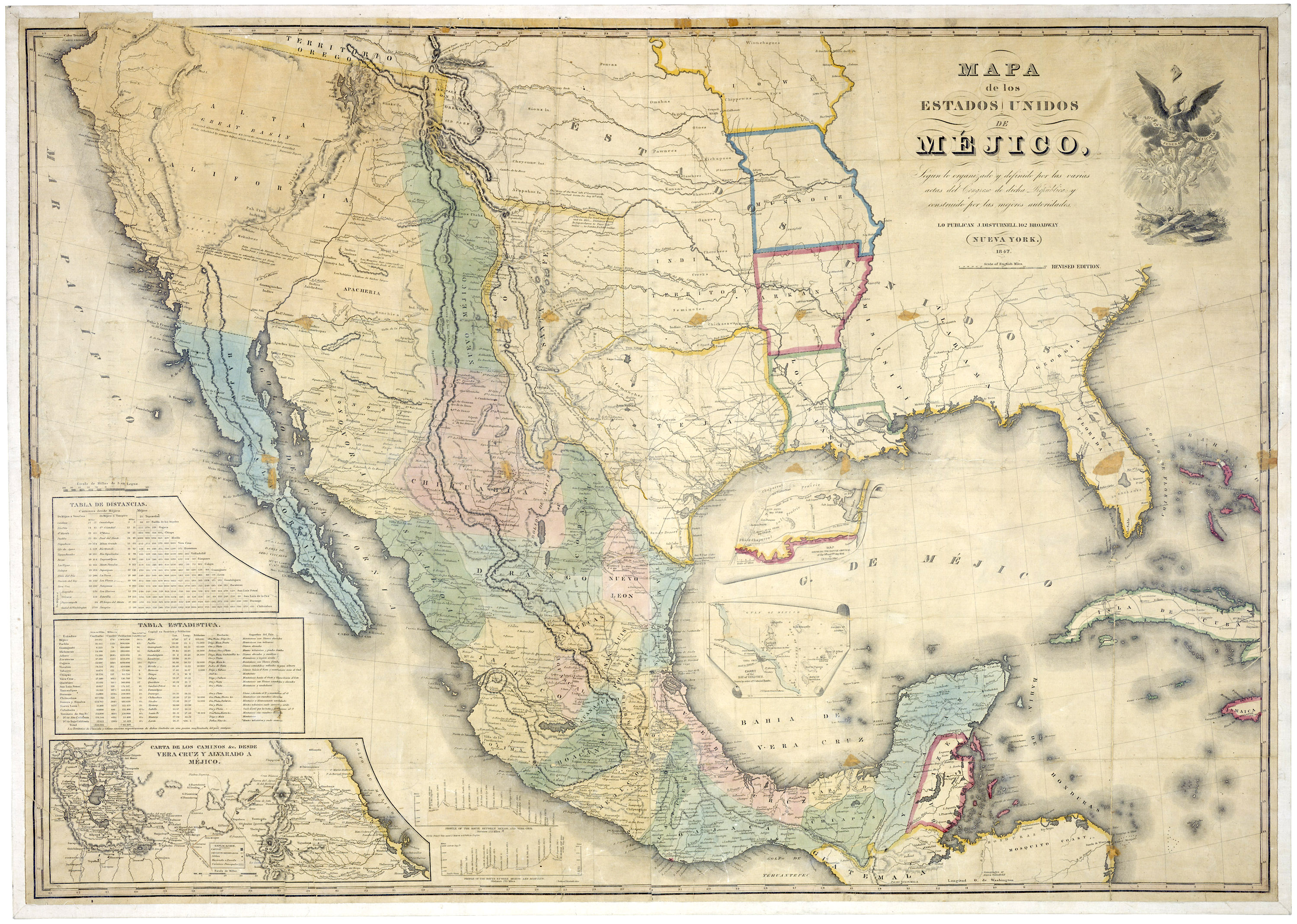
This day in Chicano history: Treaty of Guadalupe Hidalgo

mexico-disturnell-l

February 2, 1848:
The Treaty of Guadalupe Hidalgo was signed or, as my friend likes to say, Chicanos were born

From the National Archives’ Prologue Magazine (Summer, 2008) article on the Disturnell Map of 1847 (above):

On February 2, 1848, a Treaty of Peace, Friendship, Limits, and Settlement was signed at Guadalupe Hidalgo, thus terminating the Mexican-American War. While the war was ostensibly about securing the boundary of the recently annexed state of Texas, it was clear from the outset that the U.S. goal was territorial expansion. Some decades earlier, the United States had secured the Louisiana Purchase, and President Polk now saw it as America’s “manifest destiny” to acquire access to a western ocean through the acquisition of Nuevo México and the Californias (which included parts of the present-day states of New Mexico, Arizona, California, Nevada, Utah, and Colorado). Ultimately, Mexico was obliged to cede Alta California, Nuevo México, and northern portions of the states of Sonora, Coahuila and Tamaulipas.

I’d write something more significant, but my mind is kinda racing with Lost theories.

Standard
Cultura

Naming names

The emotional complexity of that cultural changeover means that parents don’t just switch from Latin names to English ones in a single go. Rather, says Jasso, they may pass through a three-stage process, “with bilingual names becoming popular for a while. Those are names like Hector and Daniel for boys and Sandra and Cecilia for girls.” [Time Magazine, Adios Juan and Juanita: Latin names trend down]

When my parents, Carlos and Luz, chose baby names, they picked names that would sound good in English and Spanish. It made sense to them. They were born in Mexico, but emigrated as school-age children. Although they are fluent in their native and adopted tongues, their parents barely spoke English. Thus, they avoided names that would be mangled by their parents and chose Daniel (well, Grandma chose that name), Cynthia, Laura and Adrian.

I like their approach. I’m not sure mom and dad saw themselves in some sort of “cultural changeover,” but their names as well as the names they chose for their children fit into the three-stage process.

As I read Jeffrey Kluger’s article on Latino names trending downward I wondered about the general premise: distinctly Latino names are dying out as the percentage of foreign born Latinos diminishes and those who are here become more assimilated. Kluger cites data from the Social Security Administration on changes in popularity for baby names.
Continue reading

Standard