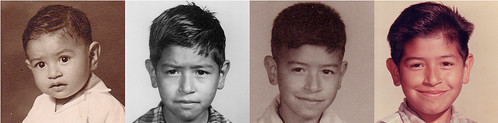
Familia

Historias de mi padre

What was it like when your family left Texas and came to California? How did Grandpa learn como sobar? Where did you meet mom? Why did you guys call yourselves los Marcianos?

***

I know the answers to these questions. As a kid, I loved listening to stories of dad and mom’s “little lives.” Dad has a way of making the sad stories of his childhood somehow funny. Mom’s stories are filled with mischievous deeds, cleverness and narrowly escaping punishment through simple luck and collusion with a sympathetic sibling or brother-in-law.

In college, I had the opportunity to delve into my family history as part of my coursework in Sociology and Chicano Studies. I interviewed Papá Chepe about being a bracero and asked dad a dozen questions about Grandpa’s ability to heal people with his hands.

I wanted to know how the macro forces of the 20th century affected my family.

Why did your family leave Salamanca? What was it like going to school in Texas in the early 60s? Do you remember the East LA blowouts?

***

Later today, I’ll put on my inquisitive hat once again as I participate in the opening day for StoryCorps Historias in East LA.

Dad and I will talk about his life, his family and especially his parents. Sadly, by the time I got very curious about family history, Grandpa and Grandma had already passed away. Dad’s stories will be recorded and hopefully I can share some of them here.

I won’t stop with dad. In the near future (what dissertation?) I’d plan to take my digital recorder and do like Studs Terkel.

Standard
Escuela

Extracurriculars

After lunch, I walked over to Murphy Hall to visit Marilyn. I worked closely with Marilyn over the last two years as vice chair and then chairwoman of the Student Fee Advisory Committee. Despite lots of headaches over budget cuts, I enjoyed my time on the committee. I learned much more about the student fee (and thus make more use of student services I pay in advance for) and university decision-making structure. The work satisfied my interest in higher education issues as well as my own need to feel like a student leader.

When I got to Marilyn’s office, I saw the current chair in the conference room. I had no idea that this week’s committee meeting was about to start.

Laila asked me, “So, are you just a student now? No appointments or anything?”

I laughed. “I’ve never been just a student.”

I can’t see myself just going to class and doing research. Instead, half the time I’ve been in graduate school, I’ve held down two jobs and several student leadership positions. Some positions were demanding and required a lot of meetings and travel. I received a respectable stipend compensating me for my time and other perks (friendships, office on campus, connections, lots of frequent flyer miles and knowledge about higher education politics). I miss that work sometimes and still find a way to connect with those friends.

This year, I’m working two jobs and serving as a graduate student representative to a systemwide committee overseeing undergraduate eligibility and admissions. I spend one Friday a month in Oakland looking at way too many tables with tiny numbers. The work fits nicely with my old job where I researched the same issue.

I’m pretty sure all these extracurriculars have delayed my time to degree. On the other hand, these activities have also kept me in school. In the times I’ve most wanted to leave graduate school, I reconsidered after knowing I’d have to give up my student leadership duties and would miss the great people I’d met through those networks.

Marilyn invited me to stick around for the meeting. I stayed for 45 minutes, until it was time to return to work (job2, in case you’re wondering).

Standard
Historia, Música

This day in Chicano history: The Day the Music Died

February 3, 1959: The Day the Music Died

From Wikipedia:

On February 3, 1959 a small-plane crash near Clear Lake, Iowa, killed three American rock and roll musicians: Buddy Holly, Ritchie Valens, and J. P. “The Big Bopper” Richardson, as well as the pilot, Roger Peterson. The day was later called The Day the Music Died by Don McLean, in his song “American Pie”.

February 3 marks a big loss for rock n’ roll and American music in general, it’s different for Chicanos as there were few of us out in the mainstream. We’ve all seen La Bamba and know the story of Ritchie Valens’ short-live music career.

To commemorate Ritchie Valens’ passing I suggest one of the following activities:

  1. Watch La Bamba on DVD
  2. Throw your laundry in the air and yell “Ritchieeeeeee!” in anguish.
  3. Play some of Valens’ hits, like Come On Let’s Go (original version, not the Los Lobos covers)
  4. Call your love and sing We Belong Together for him/her
  5. Get a tattoo of a flying guitar

Rest in peace, Ritchie!

Standard
Cultura, Historia

This day in Chicano history: Treaty of Guadalupe Hidalgo

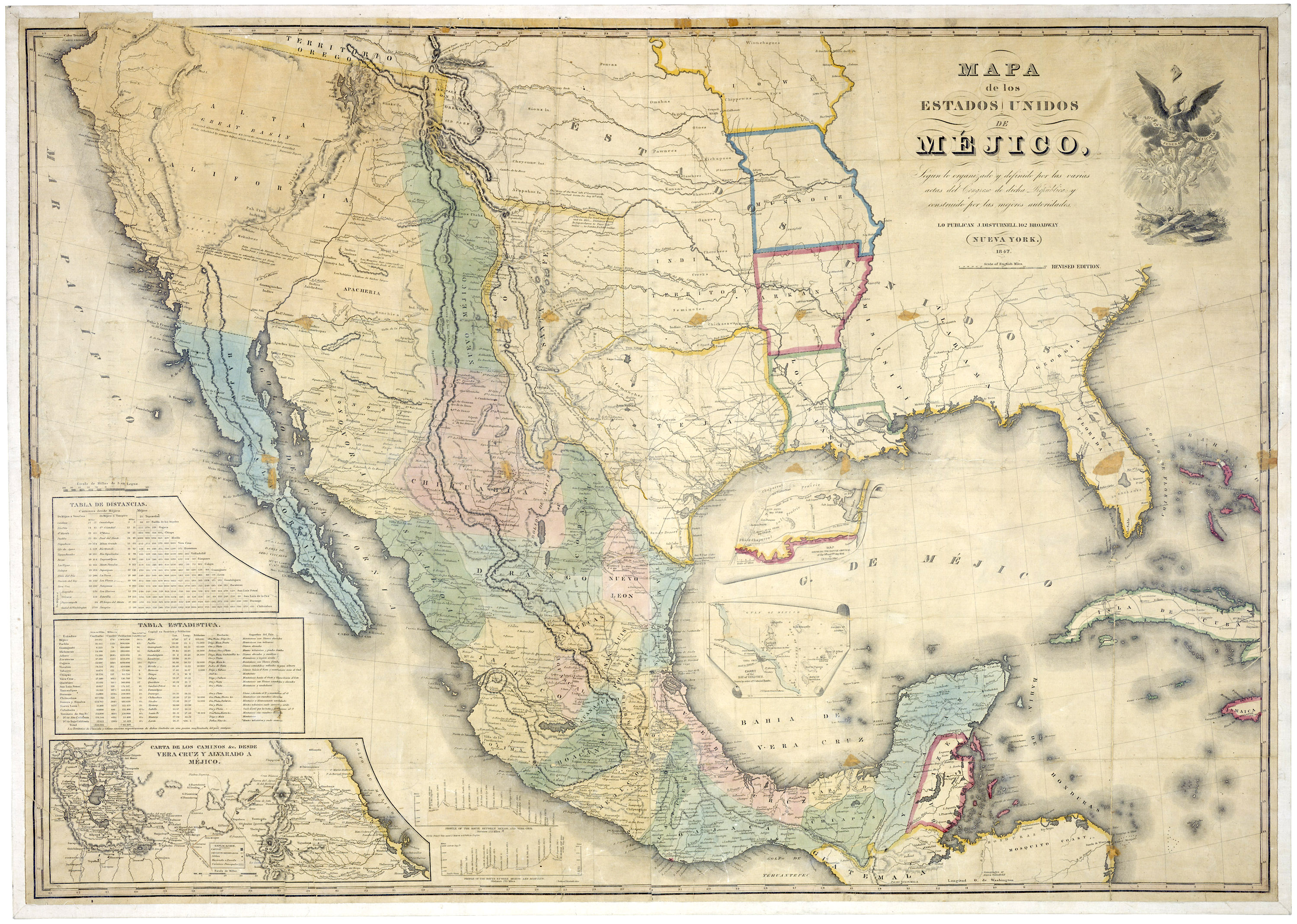
mexico-disturnell-l

February 2, 1848:
The Treaty of Guadalupe Hidalgo was signed or, as my friend likes to say, Chicanos were born

From the National Archives’ Prologue Magazine (Summer, 2008) article on the Disturnell Map of 1847 (above):

On February 2, 1848, a Treaty of Peace, Friendship, Limits, and Settlement was signed at Guadalupe Hidalgo, thus terminating the Mexican-American War. While the war was ostensibly about securing the boundary of the recently annexed state of Texas, it was clear from the outset that the U.S. goal was territorial expansion. Some decades earlier, the United States had secured the Louisiana Purchase, and President Polk now saw it as America’s “manifest destiny” to acquire access to a western ocean through the acquisition of Nuevo México and the Californias (which included parts of the present-day states of New Mexico, Arizona, California, Nevada, Utah, and Colorado). Ultimately, Mexico was obliged to cede Alta California, Nuevo México, and northern portions of the states of Sonora, Coahuila and Tamaulipas.

I’d write something more significant, but my mind is kinda racing with Lost theories.

Standard
Cuentos

Globos

Ten… nine… eight

I didn’t join in the countdown, I just steadied myself against my cousin and others in our group in anticipation for the chaos at midnight.

And it was chaotic. Balloons fell, cheers broke out, people around me hugged and kissed. I didn’t join in. No boyfriend or date by my side to hug tightly and give a sloppy drunken kiss to in celebration of a new year and decade.

Instead, I swatted the silver balloons falling around me and settling at my feet. There were a lot. They crowded the floor so I couldn’t move, not that there was much room on the crowded ballroom dance floor.

As Jesús hugged Mariana and Jenn, I stomped. I stepped on one silver balloon. It popped easily under my heel. I popped a second, then a third, a fourth and so on until the area around my feet was clear.

A tall white guy — whose silly sunglasses I had borrowed a few minutes earlier for a photo to add to the weird eye-wear files — asked, “whoa, where is all this aggression coming from?”

I shrugged my shoulders. I didn’t know.

I felt out of place at the Roosevelt Hotel’s New Year’s Eve party. It was too Hollywood. My simple black dress wasn’t shiny, short or tight enough. And my heels didn’t look like a torture device. Still, I was having a good time sipping on free drinks and dancing. My original NYE plan fell through, but Jesús saved me (hah!) with a last minute opportunity.

I snapped a few photos. The tall white guy kicked another balloon my way. I stepped on it with my heel and relished the pop.

Standard