Libros

A-Z Challenge by Title

Alternative title: What I read in the second half of the year.

After getting through the A-Z author challenge I didn’t want to organize my reading in any way. I just wanted to find more great books by authors I enjoyed. No pressure. So that’s what I did in the second half of the year.

I put holds on Ruth L. Ozeki’s earlier novels, All Over Creation and My Year of Meats. I definitely think A Tale for the Time Being is her best work, but her previous novels entertained me and made me reconsider what I eat and also more aware of fertility issues.

Daniel Alarcón’s At Night We Walk in Circles was a great sophomore effort. I enjoyed it more than Lost City Radio (I was a little burnt out on the torture/disappeared topic). On the other hand, Meg Wolitzer’s previous novels, The Uncoupling and The Ten Year Nap didn’t captivate me like The Interestings. It might have just been too many white middle/upper middle class women in New York. I needed a change of scenery which I got by reading the oeuvre of both Rainbow Rowell and Gillian Flynn. Both popular writers set their novels in small towns or cities in the Midwest. That’s about all they have in common as Rowell writes young adult/romance novels that are quick “beach reads” and Gillian Flynn writes dark, disturbing suspense-filled novels. While I found Gone Girl overhyped, I was surprised that Flynn could come up with characters and plots that were even more messed up. Amy and Nick Dunne seemed like relatively normal people compared to those in Sharp Objects and Dark Places.

Some time late in the summer I decided I wanted to read more books set in Los Angeles or Southern California. That was the impetus behind adding The Magician’s Assistant (I also really liked Ann Patchett’s Bel Canto), The Madonna’s of Echo Park and The People of Paper. I wasn’t a fan of the last book and put it down a couple of times before finally completing it.

In November I started to play around with my reading spreadsheet — oh how I love anything that can be tracked via spreadsheet — to see how many letters I was missing for an A-Z challenge by title. I needed 10 or 11 books which seemed doable if I was strategic about my choices. I picked a few books by authors who were new to me in 2014 for ideas. The Remains of the Day by Kazuo Ishiguro and Interpreter of Maladies were my favorites read specifically to complete the challenge.

The J, K, X and Z books were okay but less enjoyable. I slogged through Xicano Duende, a poetry collection. Cherríe Moraga’s A Xicana Codex essay collection would’ve been a better choice, but it was checked out at the university libraries. I found Zen and the City of Angels rather silly. I need to find decent mystery novels where motives actually make sense.

My reading goals for 2015 include some challenges, but they’re not focused on the alphabet. I’ll touch on those later.

The full list of books read for the A-Z author challenge (or, what I read from July through December):
All Over Creation by Ruth L. Ozeki
At Night We Walk in Circles by Daniel Alarcón
Attachments by Rainbow Rowell
Bel Canto by Ann Patchett
Boy, Snow, Bird by Helen Oyeyemi
The Commitments by Roddy Doyle
Dark Places by Gillian Flynn
Devil’s Highway: A True Story by Luis Alberto Urrea
Drink: The Intimate Relationship Between Women and Alcohol by Ann Dowsett Johnson
Eleanor & Park by Rainbow Rowell
Fangirl by Rainbow Rowell
The Goldfinch by Donna Tartt
Good Omens: The Nice and Accurate Prophecies of Agnes Nutter, Witch by Terry Pratchett and Neil Gaiman
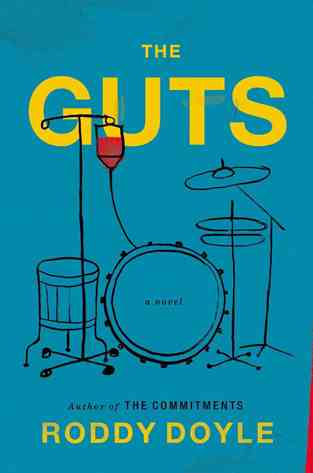
The Guts by Roddy Doyle
How To Get Filthy Rich In Rising Asia by Mohsin Hamid
Interpreter of Maladies by Jhumpa Lahiri
The Jane Austen Book Club by Karen Joy Fowler
The Kite Runner by Khaled Hosseini
Landline by Rainbow Rowell
The Lunch-box Chronicles: Notes from the Parenting Underground by Marion Winik
The Madonnas of Echo Park by Brando Skyhorse
The Magician’s Assistant by Ann Patchett
Marbles, Mania, Depression and Me by Ellen Forney
My Year of Meats by Ruth L. Ozeki
The Night Circus by Erin Morgenstern
The No Cry Sleep Solution by Elizabeth Pantley
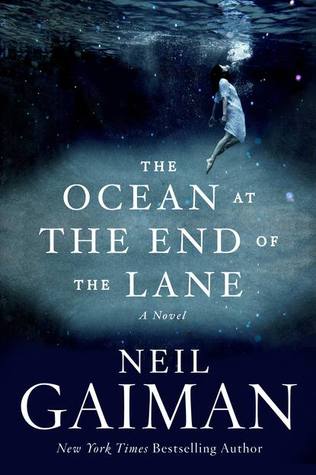
The Ocean at the End of the Lane by Neil Gaiman
The People of Paper by Salvador Plascencia
Queen of America by Luis Alberto Urrea
The Remains of the Day by Kazuo Ishiguro
Salvage the Bones by Jesmyn Ward
Sharp Objects by Gillian Flynn
Station Eleven by Emily St. John Mandel
The Ten Year Nap by Meg Wolitzer
The Uncoupling by Meg Wolitzer
A Visit from the Goon Squad by Jennifer Egan
Wave by Sonali Deraniyagala
Xicano Duende: A Selected Anthology by Alurista
Yes Please by Amy Poehler
Zen and the City of Angels by Elizabeth Cosin
Standard
Libros

Eight books for July

July felt like a really long month. Maybe it’s because I was counting down the days until Xavi’s first birthday, it was hot, or I was going through the job application/interview process.

I took advantage of those 31 days by sticking my head in a book. Or eight..

I read the first three books below as to finish off the A-Z challenge.

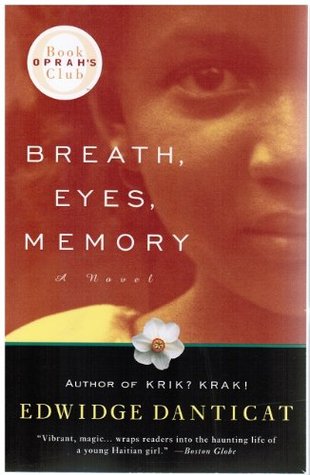
Breath, Eyes, Memory by Edwidge Danticat
For several years, I’ve come across Edwidge Danticat on lists of women writers, young writers, people of color writers, etc. I knew I should read something by her, and wasn’t sure where to start. Her first novel seemed appropriate. Overall, I enjoyed the story of Sophie Caco coming to live with her mother, Martine, in NY after many years of living with her aunt and grandmother in Haiti. Of course, the relationship between mother and daughter (and the other women, niece/aunt) are quite complicated given that Sophie is the product of rape.

Bilal’s Bread by Sulayman X
TRIGGER WARNING. Breath, Eyes, Memory was depressing in it’s exploration of rape and complicated or abusive family relationships. Bilal’s Bread topped that by adding in Kurdish refugee issues, marginalization of Muslim families, physical and sexual abuse/incest, and the coming out process. I’m not sure I’d recommend it since the depictions of physical and sexual are very graphic. However, it does explore homosexuality and Muslims — what does the Koran say vs. how followers interpret this — which was interesting.

Black Widow’s Wardrobe by Lucha Corpi
I picked this up on a whim because I remembered reading Corpi’s poetry in a Chicana/o literature class. The best way to describe it would be a mystery novel for Chicana/o studies majors. Overall, it’s okay, but it wasn’t my favorite and I don’t think I’ll read Corpi’s other two novels following her heroine and PI, Gloria Damasco. Maybe I would’ve liked it more if I had read the other books in the miniseries? I don’t read many mystery novels, but in the few I read, the villain’s motivations are always quite flimsy. That was the case with Black Widow too. I did appreciate the tie-in to Mesoamerica and the brief lessons on Malintzin/Doña Marina/La Malinche. I’ve read at least one other historical fiction novel about Malintzin, but I like Corpi’s approach more.

***

I went a little crazy in the new fiction section at the library one day and picked up 4 of the following 5 books. (I read The Commitments via e-book.)

At Night We Walk in Circles by Daniel Alarcón
Earlier this year I read Lost City Radio and didn’t love it as much as I expected. Part of what bugged me is that the sense of place was ambivalent. Peru is never mentioned, just like the word Chile is nowhere to be found in Isabel Allende’s The House of Spirits. Perhaps because I know a little more about Chile this didn’t bother me.

Despite never mentioning Peru in At Night We Walk in Circles, I didn’t feel annoyed or loss. There was a much stronger sense of place especially as Daniel Alarcón described the slow life in the provinces away from Lima.

This wasn’t a “can’t put down book,” for the first 3-4 parts (250+ pages). The set-up takes a while as the unnamed narrator tells us about Nelso and his family, the Diciembre theater troupe members, the revival of the troupe and ensuing tour in to the slow countryside.

Once I got to the end, I was surprised at how much I liked it and how well Alarcón set everything up. I remember thinking, “Whoa, I see what you did there. Cool.” Sophisticated, review, I know.

A few quotes that stuck out and are a good example of how great Alarcón is with language:

In response, Henry explained that heartbreak is like shattered glass: while it’s impossible that two pieces could splinter in precisely the same pattern, in the end, it doesn’t matter, because the effect is identical. [p. 223]

That morning, he was afraid of becoming old, and it was a very specific kind of old age he feared, one which has nothing to do with the number of years since your birth. He feared the premature old age of missed opportunities. [p. 262]

The Commitments and The Guts by Roddy Doyle

I picked up The Guts because I liked the cover. As I read the book jacket closer, I realized it was a follow-up to The Commitments so I downloaded that one first. The Commitments is the story of Jimmy Rabbitte and his friends trying to form a soul band in 1980s working class Dublin. It’s very short, but entertaining. I can see why it was made in to a film and musical. The Guts is a return to Rabbitte and some of his friends from his youth. Now he’s married, has four kids, and is still working in the music scene though not as a manager. He’s worried about his finances and health — rightfully so, he has colon cancer. I didn’t like The Guts much, mainly because I didn’t like Jimmy all that much. Also, reading a novella in Irish English is one thing, but the whole novel feels like a little too much. At least I learned new slang.

The Ocean at the End of the Lane by Neil Gaiman

I lived in books more than I lived anywhere else.

There’s a reason this is a NY Times bestseller. Just go read it. You can probably do it in one sitting, but you’ll regret it because you wished you had spent a little more time with it. That’s okay. You’ll do just as I did and re-read the prologue and first chapter. Then you’ll re-read the final chapter and epilogue. Maybe you’ll re-read everything because it’s the type of book that gets better with each new read. Then you’ll go re-read your favorite passages and quotes. There will be many. Then you’ll sadly return the book to the library, make your husband read it and promise to one day buy the lovely hardcover version. When you’re done, come back and tell me if you cried.

The Uncoupling by Meg Wolitzer
I really enjoyed The Interestings and hoped The Uncoupling would be similar. Not really.

The premise is interesting. The local high school where Dory and Robby Lang teach puts on Aristophanes’ play “Lysistrata.” In the play, the women abstain from sex in protest of the Peloponnesian War. This spell overtakes the New Jersey town and all heterosexual women, from teens to those married for several years, are suddenly disinterested in sex. While I loved The Interestings as a character study, I wasn’t drawn to the men and women in Wolitzer’s Stellar Plains. They all sort of fell flat. Also, the protest of the actual war in Afghanistan felt like it was shoehorned in. Overall, it was okay, but nowhere nearly as memorable as The Interestings.

Standard
Libros

32 Books: Reflections on the A-Z Challenge

At the beginning of the year I committed to three main goals:
1. More reading. In particular, I committed to the A-Z challenge.
2. More running. Hah.
3. More writing. Ugh.

I haven’t done so well on 2 and 3 which might explain why I finished the challenge in the first half of the year. Below are my reflections, stats (ooooh, pie charts! pretty!) and the list of books I’ve read this year. I don’t generally write reviews, but I do rate them on Goodreads.

THE LIST

Alarcón, Daniel: Lost City Radio
Allende, Isabel: Of Love and Other Shadows
Bolaño, Roberto: The Savage Detectives: A Novel
Cisneros, Sandra: Have You Seen Marie?
Corpi, Lucha: Black Widow’s Wardrobe
Danticat, Edwidge: Breath, Eyes, Memory
Eggers, Dave: What is the What: The Autobiography of Valentino Achak Deng: A Novel
Eugenides, Jeffrey: The Virgin Suicides
Flynn, Gillian: Gone Girl
Gilb, Dagoberto: Before the End, After the Beginning: Stories
Green, John: The Fault in Our Stars
Hayasaki, Erika: The Death Class: A True Story About Life
Ishiguro, Kazuo: Never Let Me Go
July, Miranda: No One Belongs Here More Than You: Stories
Kozol, Jonathan: Savage Inequalities: Children in America’s Schools
Lahiri, Jhumpa: The Lowland
Marra, Anthony: A Constellation of Vital Phenomena
Novak, B.J.: One More Thing: Stories and Other Stories
Ondaatje, Michael: Anil’s Ghost
Ozeki, Ruth: A Tale for the Time Being
Palacio, Melinda: Ocotillo Dreams
Quick, Matthew: The Good Luck of Right Now
Rodriguez, Luis J: Always Running: La Vida Loca, Gang Days in L.A.
Senior, Jennifer: All Joy and No Fun: The Paradox of Modern Parenthood
Tobar, Hector: The Barbarian Nurseries
Urrea, Luis Alberto: Into the Beautiful North
Vowell, Sarah: Unfamiliar Fishes
Wiehl, Lis: Snapshot
Wolitzer, Meg: The Interestings
X, Sulayman: Bilal’s Bread
Yañez, Richard: Cross Over Water
Zambrano, Mario Alberto: Lotería

REFLECTIONS

I’m glad I committed to this challenge and would be up for a second round. Thanks to the challenge, I found several new-to-me writers, rediscovered my love for reading, found a new-ish hobby to do in my “me time” and passed the time on my bus commute.

Naturally, the best part of the challenge was finding new writers and branching out. I mainly read fiction but I tried to mix it up with the familiar and the new. Most of the books below (75%) were written by new-to-me writers. I found some books by just scanning the bookshelves at the library and others through blogs or message boards. Melissa, la Feminist Texican, indirectly contributed to the list with her reviews. I picked a quarter of my reads after reading her reviews. I added other novels such as The Fault in Our Stars and Gone Girl since they’re currently bestsellers and I wanted to see what all the hype was about.

I found a number of new-to-me writers I’ll keep on my radar. Namely: Anthony Marra, Ruth Ozeki, Mario Alberto Zambrano and Meg Wolitzer. I’ve already found a couple of Ozeki and Wolitzer’s other novels at the library and added them to my reading list. Marra doesn’t have other novels published but I added novels that influenced him which is how I ended up reading a few novels about wartorn countries, torture and disappearances (see: Anil’s Ghost and Lost City Radio).

As with anything called a “challenge,” there are downsides. First, I slogged through at least one book I would’ve put down much earlier if I didn’t need that letter (looking at you, Bolaño). The silly thing is that some of the books I liked least were letters I didn’t even need. I either forgot that or was stubborn. Second, I put off reading books on my list because I didn’t need that particular letter.

STATS AND STUFF


Favorite book overall: A Constellation of Vital Phenomena

Books that made me cry:
A Constellation of Vital Phenomena
The Death Class: A True Story About Life
Never Let Me Go
A Tale for the Time Being
The Interestings (maybe, I forgot now)

Toughest letter to find: I. Surprisingly, letters like Q, X and Z weren’t tough to find. I found my X author by just scanning books on the shelf when I went to get Richard Yañez’s Cross Over Water at the library. I checked out Feminist Texican’s A-Z archive for I authors and found Kazuo Ishiguro.

STATS2

Type: Mainly novels and fiction. At least one book straddled the technical line between fiction and nonfiction. What is the What reads like a memoir but “novel” is in the title.

I read the most books in the late spring/early summer. I think this was because I wanted to finish by the start of July and I stopped picking longer books.

Average number of pages: 304. Longest: The Savage Detectives at 577 pages. Shortest was Have You Seen Marie? by Sandra Cisneros at 101 pages, which reads like an illustrated poem. I added Black Widow’s Wardrobe by Lucha Corpi since I felt like a picture book didn’t really count and I still needed a C.

Format: 21 books (15 borrowed from library), 10 e-books, 1 read in both formats

Most disturbing: Bilal’s Bread. This needs all the trigger warnings. It’s also the most niche book being about Kurdish immigrants, Muslims, and gay teens. Runner up: What is the What. Can’t Valentino Achak Deng catch a break?!

Funniest: One More Thing. I laughed out loud at some of the questions for discussion that Novak includes at the end.

Most enlightening: All Joy and No Fun. So much of the chapters on being a new parent rang true.

Standard
Libros

Recent reads: The A list

Sometime late last year Lotería Chicana became all baby all the time — or at least when I updated every month or so. I didn’t intend for that, but pregnancy was the only new thing I felt like writing about. Everything else — even newlywed life — felt familiar. I actually wish I’d been writing more over the past 9 months even if just for myself. I’ll never get to experience this for the first time again.

Anyway, I could’ve blogged about other topics. First up: my recent reads.

I have a list in Google Drive with books I’d like to read. Some have been on there a long time and others were just added. Now that I can read without worrying that I may get motion sickness on the bus, I’ve been making some progress on my list. I also have the feeling that I won’t get much of a chance to read for fun in the near future. Recent reads:

A Wedding in Haiti by Julia Alvarez
Part travelogue and part essay on visiting Haiti after the earthquake. It’s saddening but leaves you with a sense of hope. I also like that it continues her theme of exploring immigrant life and borders.

Finding Miracles by Julia Alvarez
YA fiction. It bugged me that she never mentioned the country Milly and Pablo are from, but I understand why she left it out.

Sherman Alexie is one of my favorite writers

Blasphemy: New and Selected Stories by Sherman Alexie
Alexie has been one of my favorites since I read Ten Little Indians about ten years ago. I was geeked out to meet him after a reading in San Francisco in 2009. Even his Twitter feed is entertaining. Anyway, I was a little disappointed that most of the stories in this collection had been published in previous collections. Still, I remembered them well and found myself highlighting (read the e-book version) the same passages that originally struck me many years ago. There were a couple of new stories that really shook me.

Things Fall Apart by Chinua Achebe
Achebe’s classic had been on my bookshelf for a while. Unknowingly, it would start a mini-Nigerian contemporary fiction kick.

Americanah by Chimamanda Ngozi Adichie
I heard about Americanah from friends, but didn’t know anything about the story or the author until my friend Gene posted a photo of a page. Gene was rightfully excited to see the blog he started PostBourgie and worked on with friends (including yours truly — I’ve cross posted a few times) mentioned in the novel. In it the protagonist, Ifemelu, mentions PostBourgie as one of her favorite blogs. Sean — also part of the PostBourgie family — bought the book that afternoon. A week later, I was at the Central Library downtown for AloudLA where Adichie read from the novel and discussed the various themes (race, taking on a black American identity, relationships, immigrant experience, hair) with Faith Adiele.

Purple Hibiscus by Chimamanda Ngozi Adichie
When I really like a writer, I tend to binge on her work. Adichie is no exception. Purple Hibiscus didn’t have me laughing like Americanah, but I was still touched, saddened and disturbed.

The Thing Around Your Neck by Chimamanda Ngozi Adichie
I didn’t read this short story collection with the same eagerness as the previous two novels, but still enjoyed it. I found myself thinking of characters in the short stories as characters from the other novels.

The House of the Spirits by Isabel Allende
No, I didn’t intend to read books by “A” writers. It just happened that way. I really liked this novel and was a little upset with myself for taking so long to take it off my bookshelf and actually start reading it. I don’t know why I delayed. I probably wanted to read it in Spanish, but that always slows me down a lot. The final third of the novel reminded me of what I’d learn in my contemporary Chilean film and literature course in college. I no longer felt like I was reading fiction as the novel covered the Salvador Allende presidency, the military coup and the repression and torture under the Pinochet dictatorship — without ever mentioning any names.

Hunger of Memory: The Education of Richard Rodriguez by Richard Rodriguez
I’ve never been drawn to Rodriguez. When I was younger, I knew little about him and simplistically just thought of him as the sell-out against affirmative action and bilingual education. However, I grew more interested when others recommended him as a strong essayist and memoirist. I can’t say I liked it mainly because I never could relate to Rodriguez even when he talked about growing up devoutly Catholic (he remembers pre-Vatican II days). I do intend to read his more recent memoirs.

Standard