Cine, Historia

This day in Chicano history: Paul Rodriguez (1955)

January 19, 1955:
Paul Rodriguez was born in Culiacán, Sinaloa, México

From Wikipedia:

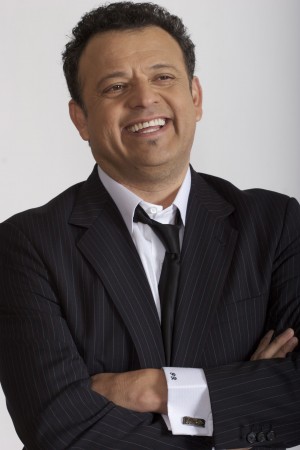
Rodriguez was born in Culiacán, Sinaloa, México to Mexican agriculture ranchers. His family migrated to East Los Angeles, where he enlisted in the military; he was stationed in Iceland and Duluth, Minnesota. Rodriguez endorsed Meg Whitman in the 2010 California gubernatorial election.

Really? Meg Whitman? I didn’t know he was a Republican. It’s always a little surprising when I hear of a famous Latino who is not aligned with the Democratic party. Maybe there’s something about Mexicans who grew up in Compton (hey, HP!).

Like a lot of people my age, I first remember Rodriguez as the recent probably-not-legal immigrant, Javier, who shows up at Rudy’s house in Born in East LA. Javier gets freaked out by the television and telephone while Rudy (Cheech Marin) is getting accidentally deported. Over the years, Rodriguez has been in several other films, television shows, done voice over work and recorded comedy albums and television shows. If you Google him, you might get some results for his son, Paul, a pro skateboarder. P-Rod made one of my favorite commercials a few years ago. Check it out.

Reading up on Paul Rodriguez brought a question to mind. If there was a Latino version of the Kevin Bacon game, who would take the place of Bacon?

I’d choose any of the following:
Paul Rodriguez
Edward James Olmos
Lupe Ontiveros
Cheech Marin
Hector Elizondo

All actors are veterans and have been in many mainstream and Latino-focused movies and television shows. In the past, I was pretty sure it was Eddie Olmos. I wrote up mini analyses of Born in East LA and La Bamba, but got lazy and abandoned the project. One of the things I looked for in the Latino LA-based films was an Olmos connection.

Photo via Instant Riverside.

Standard
Historia

This day in Chicana herstory: Dolores Huerta (1930)

April 10, 1930:
Dolores Huerta (nee Fernadez) was born in Dawson, New Mexico*

From a biography put together by the Girl Scouts:

Dolores Huerta is the President of the Dolores Huerta Foundation, and the co-founder and First Vice President Emeritus of the United Farm Workers of America, AFL-CIO (UFW). She is the mother of 11 children, 14 grandchildren and six great-grandchildren. Dolores has played a major role in the American civil rights movement.

Dolores Huerta was born on April 10, 1930 in the mining town of Dawson, in northern New Mexico, where her father, Juan Fernandez, was a miner, field worker, union activist and State Assemblyman. Her parents divorced when she was three years old. Her mother, Alicia Chavez, raised Dolores, along with her two brothers, and two sisters, in the San Joaquin valley farm worker community of Stockton, California. She was a businesswoman who owned a restaurant and a 70-room hotel. Dolores’ mother was a major influence in Dolores’ life. She taught Dolores to be generous and caring for others. She often put up farm workers and their families for free in her hotel. She was also a community activist, and supported Dolores and her Girl Scout troop. [Source]

Since college — when I first became aware of Dolores Huerta’s legacy of activism and leadership — I’ve seen her speak a few times at rallies or organized labor events. Those always left me inspired. However, it’s when I see her unexpectedly at an airport or restaurant that I’m left a little star struck. Can you blame me?

Her life’s accomplishments are impressive. As an octogenarian she’s still going strong and continues the work to improve women and poor peoples’ lives as the president of the Dolores Huerta Foundation. For her 80th birthday party, her organization hosted a benefit concert for the foundation. She speaks out on sexism and homophobia, often ignored in the Latino activist community.

Dolores Huerta is an inspiration to women who want to be leaders and affect change in their local communities and beyond. She’s a mujer to be reckoned with. If you have any doubts, simply listen to the strength in her voice as she discusses her life’s work in an interview with Maria Hinojosa on Latino USA. (Make sure to scroll down… you’ll see someone familiar.)
Continue reading

Standard
Historia

This day in Chicano history: Oscar Zeta Acosta (1935)

April 8, 1935:
Oscar Zeta Acosta was born in El Paso, Texas (also known as El Chuco)

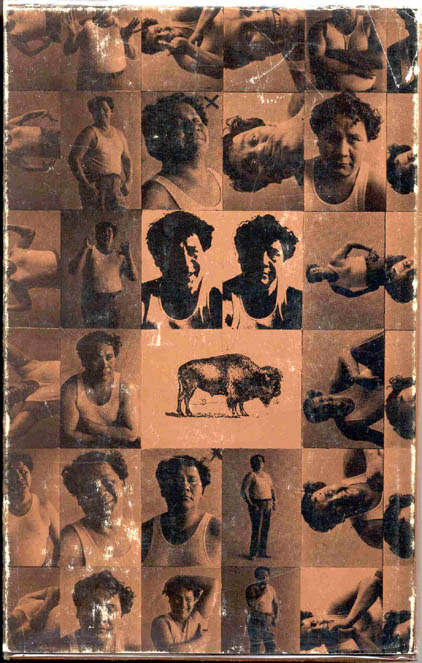
“Oscar was a wild boy. He stomped on any terra he wandered into, and many people feared him….His birthday is not noted on any calendar, and his death was barely noticed….But the hole, that he left was a big one, and nobody even tried to sew it up. He was a player. He was Big. And when he roared into your driveway at night, you knew he was bringing music, whether you wanted it or not.”
– Hunter S. Thompson in the introduction of the reissues of Oscar Zeta Acosta’s The Autobiography of a Brown Buffalo and The Revolt of the Cockroach People

Still lost on this Oscar guy?

Maybe this mini-bio from Gregg Barrios in the San Antonio Current will help:

Oscar Z. Acosta, born a Tejano in 1935 in El Chuco, grew up in California. He later became a lawyer and part of the Chicano cultural and civil-rights movimiento in the late 1960s. He ran as a Raza Unida candidate for sheriff of Los Angeles County in 1970. Despite a minuscule campaign budget, he came in second with more than 100,000 votes. His platform: Abolish the police department. [source]

Even though I was a Chicana/o Studies major in college who took a lot of Chicano literature classes, I learned about Acosta through the film adaptation of Hunter S. Thompson’s Fear and Loathing in Las Vegas. While watching it with MEChista friends, I remember one of the guys saying that the Samoan attorney, Dr. Gonzo, was really supposed to be Chicano. I was clueless.

OSCARAD

A few years later, I read The Autobiography of a Brown Buffalo for one of my Chicano literature classes. It was much different than the other works, but I enjoyed it. I flipped through my copy today and was amused at what I underlined. Some examples (I added the bolded emphasis):

What value is a life without booze and Mexican food? Can you just imagine me drinking two quarts of milk every day for the rest of my life? they said, “Nothing hot or cold, nothing spicy and absolutely nothing alcoholic.” Shit, I couldn’t be bland if my life depended on it.” (p. 12)

“What I see now on this rainy day in January, 1968, what is clear to me after this sojourn is that I am neither a Mexican nor an American. I am neither a Catholic nor a Protestant. I am a Chicano by ancestry and a Brown Buffalo by choice. Is that so hard for you to understand? Or is that you choose not to understand for fear that I’ll get even with you? D you fear the herds who were slaughtered, butchered and cut up to make life a bit more pleasant for you? Even though you would have survived without eating of our flesh, using our skins to keep you warm and racking our heads on your living room walls as trophies, still we mean you no harm. We are not a vengeful people. Like my old man used to say, an Indian forgives, but he never forgets… that, ladies and gentlemen, is all I meant to say. That unless we band together, we brown buffalos will become extinct. And I do not want to live in a world without brown buffalos.” (p. 199)

In the same Chicano literature class, we also read Acosta’s 1973 letter to Playboy in which he tried to set the record straight about gonzo journalism. He disappeared in Mexico the next year and thus most people associate Thompson with the beginnings of gonzo journalism. Chicanos, however, have a different take on it. (See: When Zeta met Hunter a short article by Gregg Barrios).

For more on Acosta’s activist, legal and political career, check out Oscar Zeta Acosta: One of God’s own prototypes, an excellent blog post by Amaury Nora. Or just read Revolt of the Cockroach People.

Images source

Standard
Historia

This day in Chicano history: César E. Chávez (1927)

March 31, 1927:
César E. Chávez born near Yuma, Arizona

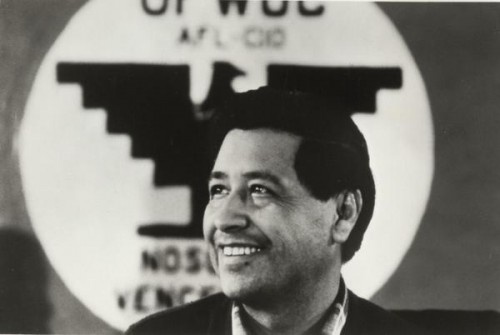
March 31st is a day to remember César Chávez’s legacy of service and sacrifice. Chávez’s birthday is a holiday in Califoria and seven other states. President Obama proclaimed March 31st César Chávez Day.

I know a lot of readers know about Chávez, so I’ll focus on his early life before he became a community organizer.

Cesar Chavez was born on a small farm near Yuma, Arizona on March 31, 1927. After being forced off their farm during the Depression, Cesar’s family moved to California in 1937 where they became migrant workers. Cesar was 10 years old when he began working in the fields. He was forced to leave school after graduating from the eighth grade in order to help support his family.

In 1945, he fought the good fight against fascism as he joined the U.S. Navy serving in the western Pacific during the end of World War II. In 1948, he married Helen Fabela and raised eight children in East San Jose where he and his wife taught farm workers to read and write so they could become U.S. citizens. [Source: Cesar E. Chavez National Holiday]

Earlier in the week, I wasn’t so keen on Chávez. I went for a run on Monday night. I set off on my usual route around the park and golf course. About half way through, I turned back toward the park because I wasn’t feeling well and needed to get to the bathroom. As I neared the park’s gym, I noticed all the doors were closed and had flyers posted with César Chávez’s photo. The park was closed in observance of Chávez’s birthday. I momentarily cursed Chávez, or the holiday — I really had to go to the bathroom.

But I took back my bad thoughts when I remembered that I collected signatures in the late 90s in support of a state holiday. And I was educated in the César E. Chávez Center for Chicana/o Studies at UCLA (now department). And my dad kinda looks like him. Plus, I found an open bathroom by the tennis courts.

Standard
Historia, Música

This day in Chicana herstory: Selena Quintanilla-Pérez is killed (1995)

March 31, 1995:
Selena Quintanilla-Pérez, Tejano music superstar, was killed by Yolanda Saldívar. She was 23 years old.

I wrote about the anniversary of her passing four years ago:

“Did you even know her before she died?”

“No,” I admitted.

He looked at me like I was a fraud. Well, not really. But that’s what I felt like when I admitted my pre-1995 Selena ignorance.

In 1995 I was busy getting through my freshman year of high school. All I listened to was KROQ and was pretty much over the banda craze of the early 1990s. I hardly ever switched the dial to any of LA’s many popular Spanish-language stations.

When my 8-year old neighor, Jorge, came over to our house to tell us the breaking news that Selena had been shot and was dead (or dying, can’t remember), I thought “who?” Jorge saw the look of confusion on my face and told me it was the woman who sang “Bidi Bidi Bom Bom.” I had some familiarity with the song, but didn’t know anything about the singer. Like many other people, I got to know Selena’s music posthumously and through the Gregory Nava film.

I remember watching the film in Ontario at the movie theater where my cousin worked (he got us in free, one of the perks of being employee of the year). I completely identified with the young Selena Quintanilla. My dad used to teach me Mexican songs. He’d translate the lyrics and explain what the words meant. Danny, my older brother, and I were put in singing contests and often willingly joined our dad when he brought out the guitar.

Go dance a cumbia in her honor. If you don’t have any songs available, check the Bicoastal Mixtape. I’ve posted a couple of her songs. Or watch the movie.

Standard